2026 Volkswagen Taigun Facelift Unveiled: New Design, Features & 8-Speed Automatic – Everything You Need to Know
3 min read
The Volkswagen Taigun has played a defining role in Volkswagen’s India strategy, marking its return to serious contention in the mid-size SUV space. Built on the highly localised MQB-A0-IN platform, it struck a rare balance between European engineering precision and the expectations of Indian buyers.
Now, with the unveiling of the 2026 Taigun facelift on April 9, Volkswagen isn’t attempting to reinvent the formula. Instead, it has focused on refining the product in areas that matter most—design, in-cabin experience, and everyday usability—while retaining the core strengths that made the Taigun relevant in the first place.
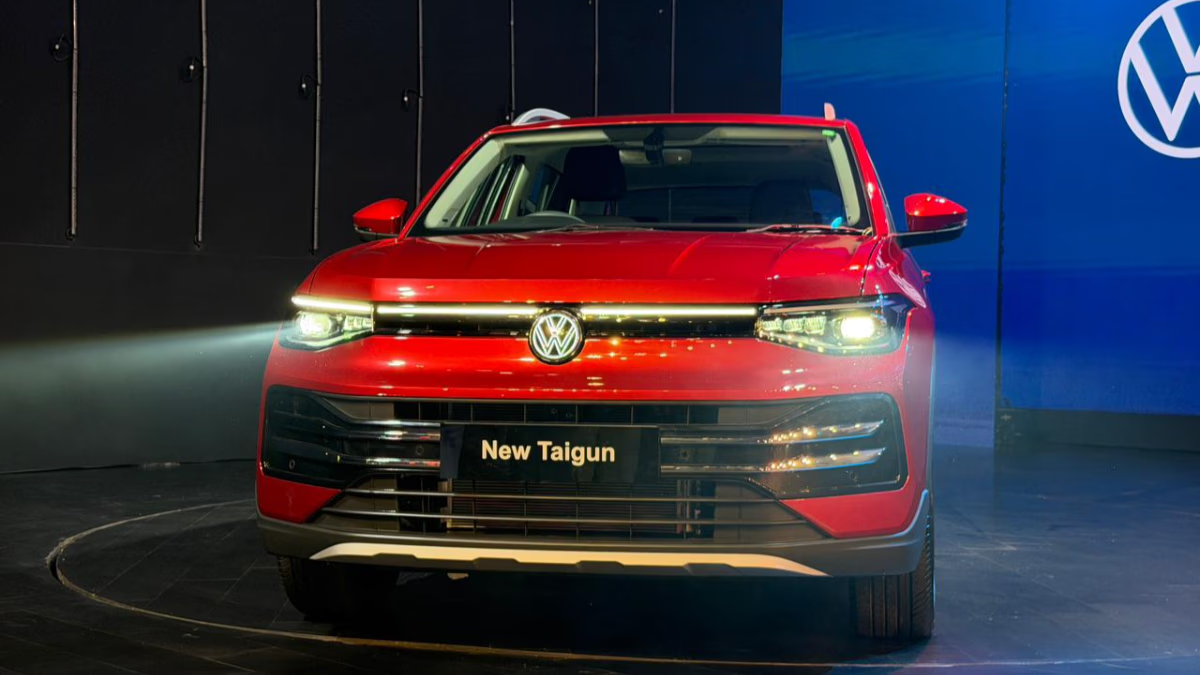
From the outside, the changes are immediately noticeable, yet not overdone. The front fascia has been reworked to align with Volkswagen’s latest global SUV design language, drawing inspiration from models like the Tayron. The headlamps are now sleeker, connected by a clean LED light bar, while an illuminated Volkswagen logo adds a layer of visual sophistication that was previously missing. The grille has been slimmed down, and the bumper gets a more structured, horizontal treatment that enhances the SUV’s stance without making it look aggressive for the sake of it.
Move along the side, and the silhouette remains familiar—intentionally so. This is not a redesign, but a facelift. The only noticeable change here comes in the form of newly designed 17-inch alloy wheels, which subtly modernise the profile. At the rear, however, the update feels more substantial. The Taigun now features connected LED tail lamps with sequential turn indicators, along with an illuminated logo, bringing it in line with current premium design trends.
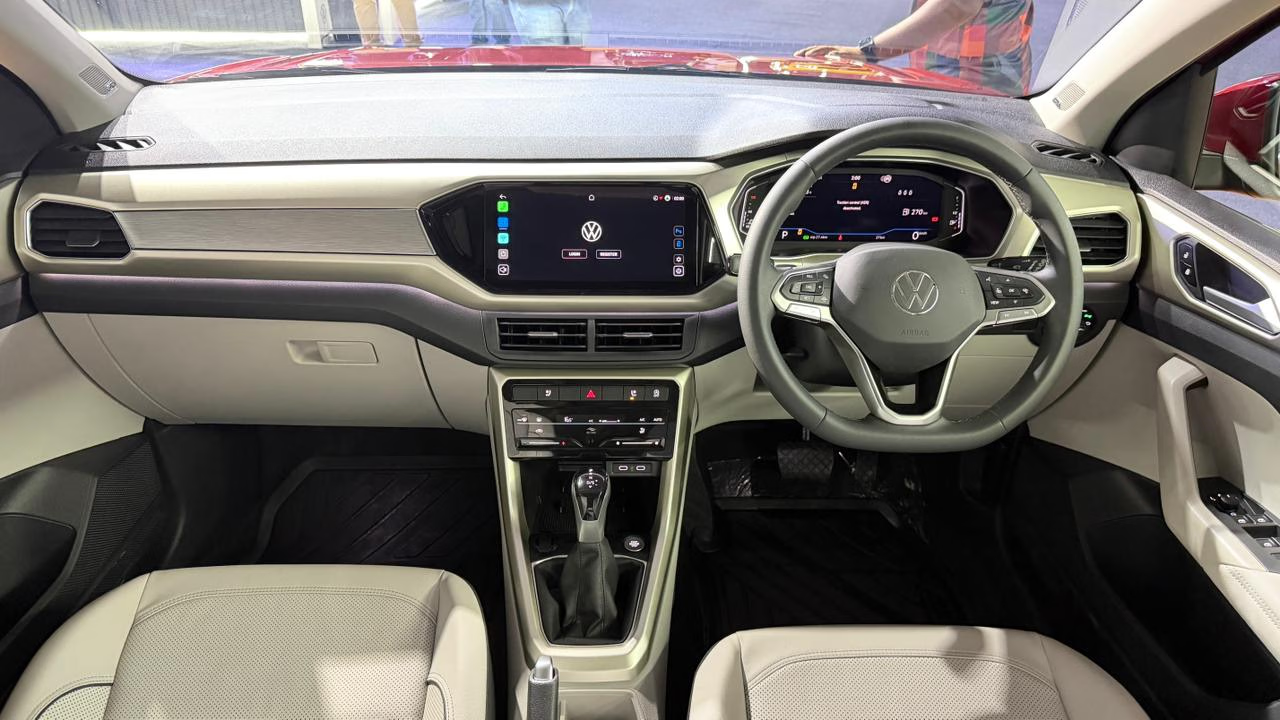
Step inside, and the direction becomes clearer. The cabin layout remains fundamentally unchanged, but the experience has been elevated. Volkswagen has introduced a larger 10.25-inch digital driver’s display, paired with an updated 10.1-inch infotainment system that now runs improved software with cleaner graphics and AI-based integration. The interface feels more contemporary, and more importantly, more responsive—something that directly impacts daily usability.
A significant addition is the panoramic sunroof, a feature that has become almost non-negotiable in this segment. Its absence was one of the few noticeable gaps in the outgoing model, and its inclusion here immediately improves perceived value. Alongside this, features like ventilated and powered front seats, wireless smartphone connectivity, ambient lighting, and wireless charging contribute to a cabin that now feels far more aligned with segment expectations.
Volkswagen has also worked on material finishes and upholstery options, offering multiple interior themes depending on the variant. The result is a cabin that feels more premium without losing the clean, functional layout that has always been a Taigun strength.
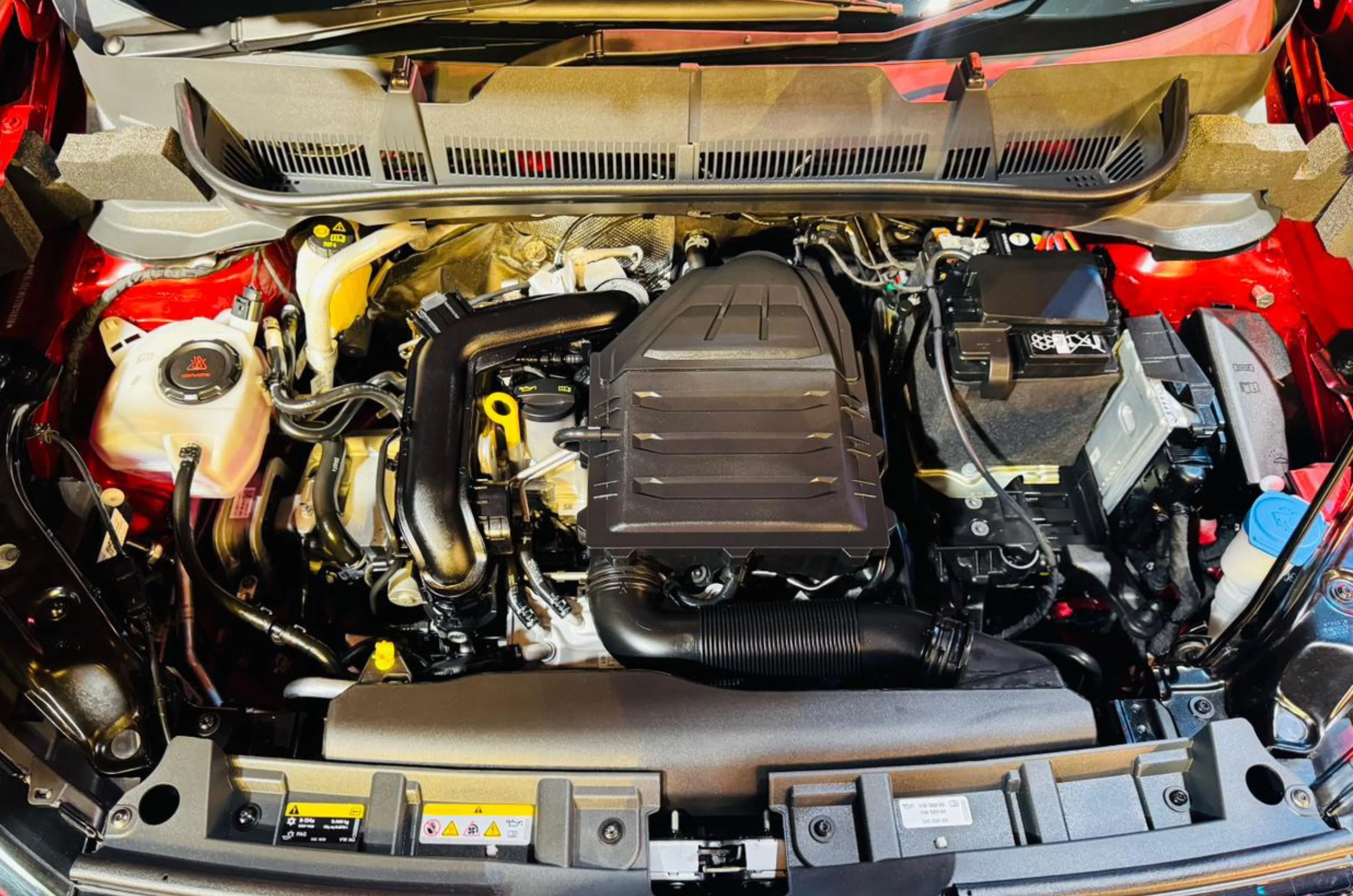
Under the skin, the changes are more targeted than extensive. The Taigun continues with its proven turbo-petrol engine lineup, consisting of the 1.0-litre TSI and the more performance-focused 1.5-litre TSI. What stands out, however, is the introduction of a new 8-speed torque converter automatic gearbox for the 1.0 TSI engine. This replaces the older 6-speed unit and is expected to deliver smoother shifts and better drivability, particularly in urban conditions.
The 1.5 TSI continues with the 7-speed DSG, maintaining its positioning as the enthusiast’s choice in the lineup. Additionally, Volkswagen has addressed a long-standing request by introducing rear disc brakes on the 1.5 TSI variants, reinforcing the brand’s focus on driving dynamics and safety.
Efficiency has also seen a marginal improvement, with Volkswagen claiming a near six percent gain for the 1.0 TSI engine. While not a headline change, it contributes to the overall refinement of the package.
Safety, which has always been a strong point for the Taigun, remains unchanged in terms of fundamentals. The SUV continues to offer six airbags, electronic stability control, traction control, hill-hold assist, and a range of active and passive safety systems. Importantly, it retains its 5-star safety rating, which continues to be a key differentiator in this segment.
In the broader market context, the Taigun facelift continues to compete with established players like the Hyundai Creta, Kia Seltos, and its platform sibling, the Skoda Kushaq. What this update does is close the gap in areas where these rivals had an edge—particularly in feature richness and perceived premium appeal—while preserving the Taigun’s inherent strengths in build quality and driving experience.
Bookings for the Taigun facelift are now open, with launch expected by the end of April. Pricing will ultimately determine how competitive this update is, but from a product standpoint, Volkswagen has made the right moves.
This isn’t a dramatic transformation. It doesn’t need to be. What the 2026 Taigun facelift represents is a more complete, more mature version of a product that was already fundamentally strong. And in a segment where incremental improvements often make the biggest difference, that might be exactly what Volkswagen needed.