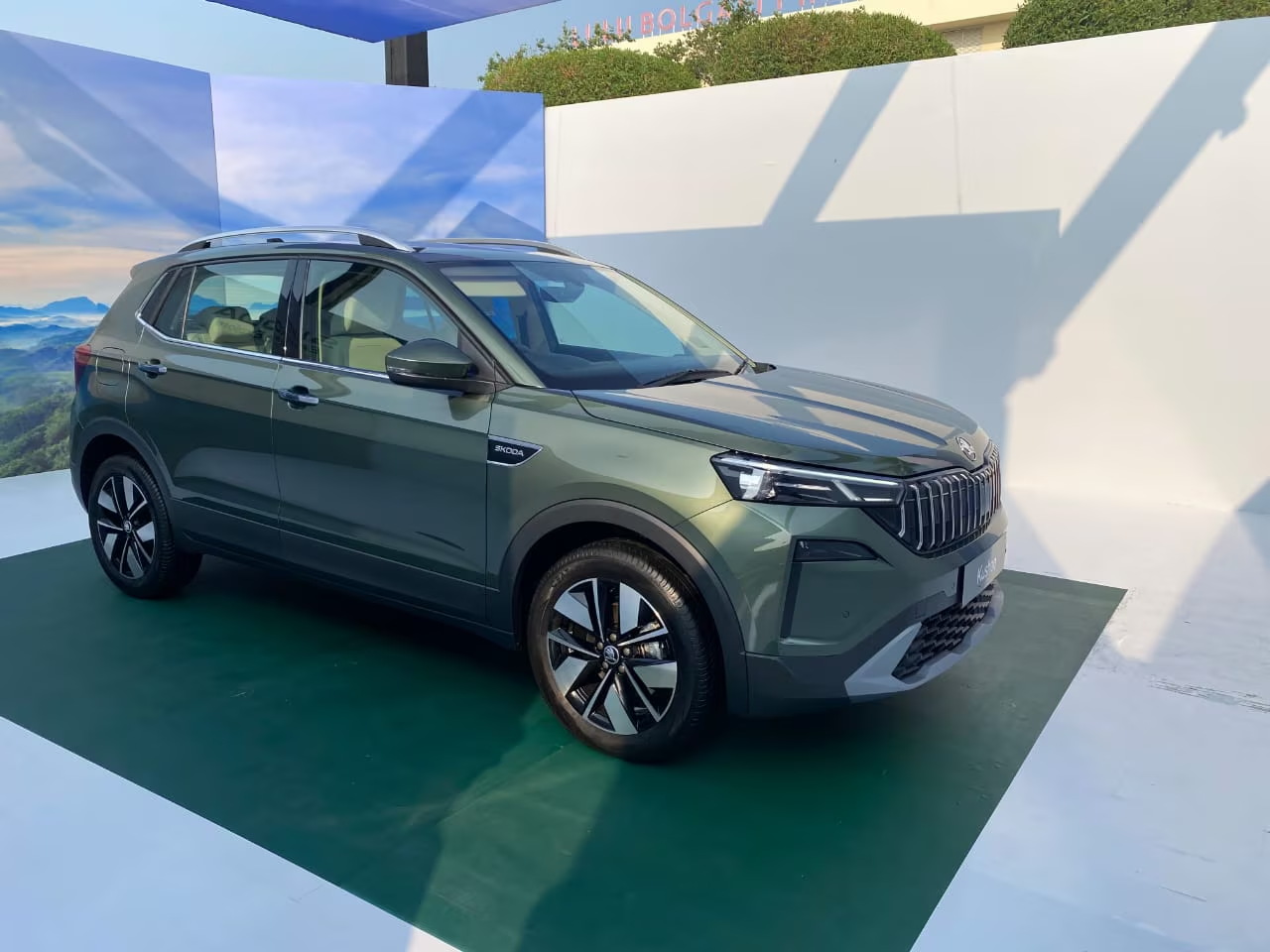
Skoda Kushaq Facelift: What Has Actually Changed for Buyers?
5 min read
Skoda has launched the Kushaq facelift in India at a starting price of Rs 10.69 lakh, going up to Rs 18.99 lakh ex-showroom. On paper, this is a mid-cycle update. In reality, it feels more like Skoda trying to sharpen the Kushaq exactly where it needed help most — features, transmission appeal and day-to-day usability — without disturbing the core character that made buyers consider it in the first place.
That last part matters.
Because the Kushaq was never really the default midsize SUV choice in India. It was usually the one picked by a slightly more involved buyer — someone who cared about how a car drives, liked the clean European design language, and wanted something that felt tighter and more mature than the usual segment crowd. The facelift does not change that identity. It simply makes the Kushaq easier to recommend to a wider set of buyers.
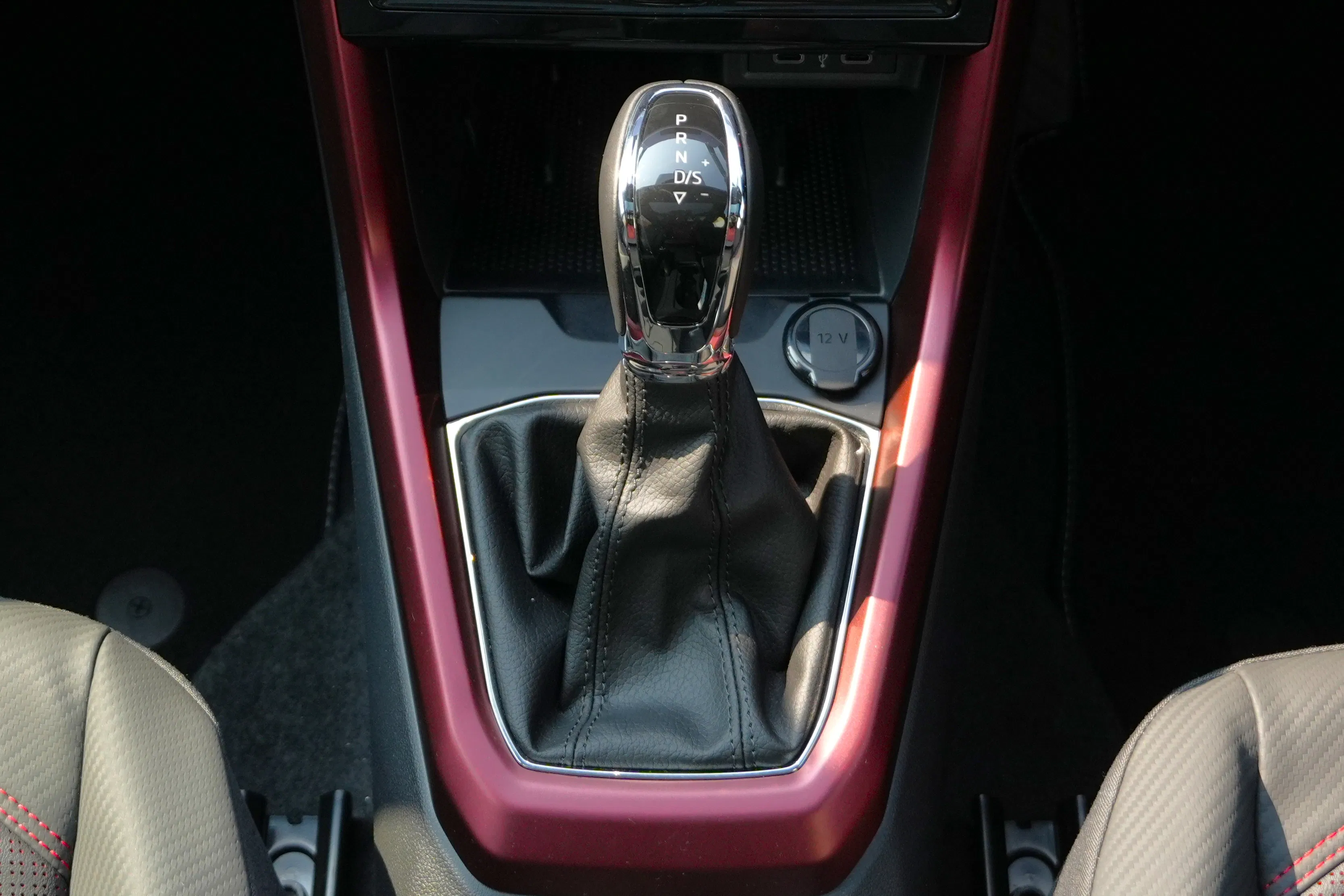
The headline upgrade is the new 8-speed automatic gearbox for the 1.0-litre TSI engine, replacing the earlier 6-speed automatic. That alone is a meaningful change. Not because buyers obsess over the number of gears, but because this directly affects how the Kushaq feels in the real world. Smoother low-speed response, better cruising behaviour and improved fuel-efficiency figures make the 1.0 TSI automatic a more convincing everyday option than before. Skoda claims 19.09kpl for the new 1.0 TSI automatic, which is a notable jump from the older 15.78kpl figure, while the manual now claims 19.66kpl.
That is important because the 1.0 TSI has always been the engine that makes the Kushaq accessible. Now it also looks more complete.
Then there is the feature list, and this is where Skoda has clearly read the market. Buyers in this segment no longer compare only engines, ride quality and badge value. They compare what they can see, touch and show off every day. So the Kushaq facelift adds the things this segment now expects — and in one case, something nobody else offers.
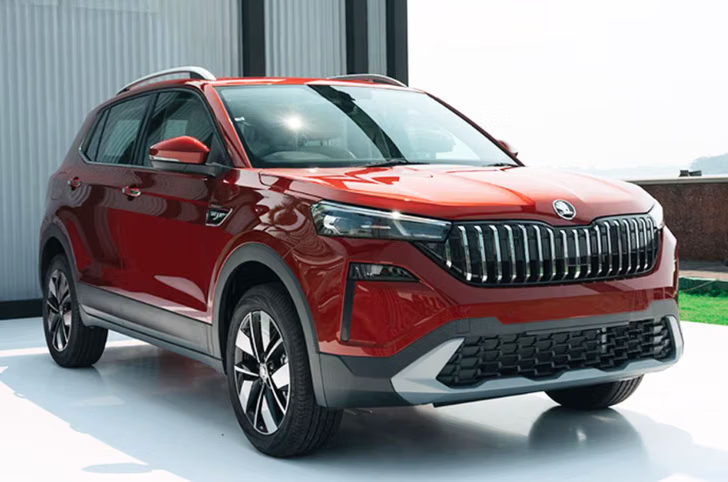
The big visual update is the move to Skoda’s newer design language. The facelift gets slimmer LED headlamps, a revised front end with a segmented grille light treatment, reshaped bumpers and updated alloy wheels. At the rear, there is now a full-width LED light bar with illuminated Skoda lettering and sequential turn indicators. It is not a dramatic redesign, and that works in the Kushaq’s favour. The SUV still looks clean and proportionate, but now has a little more theatre at first glance.
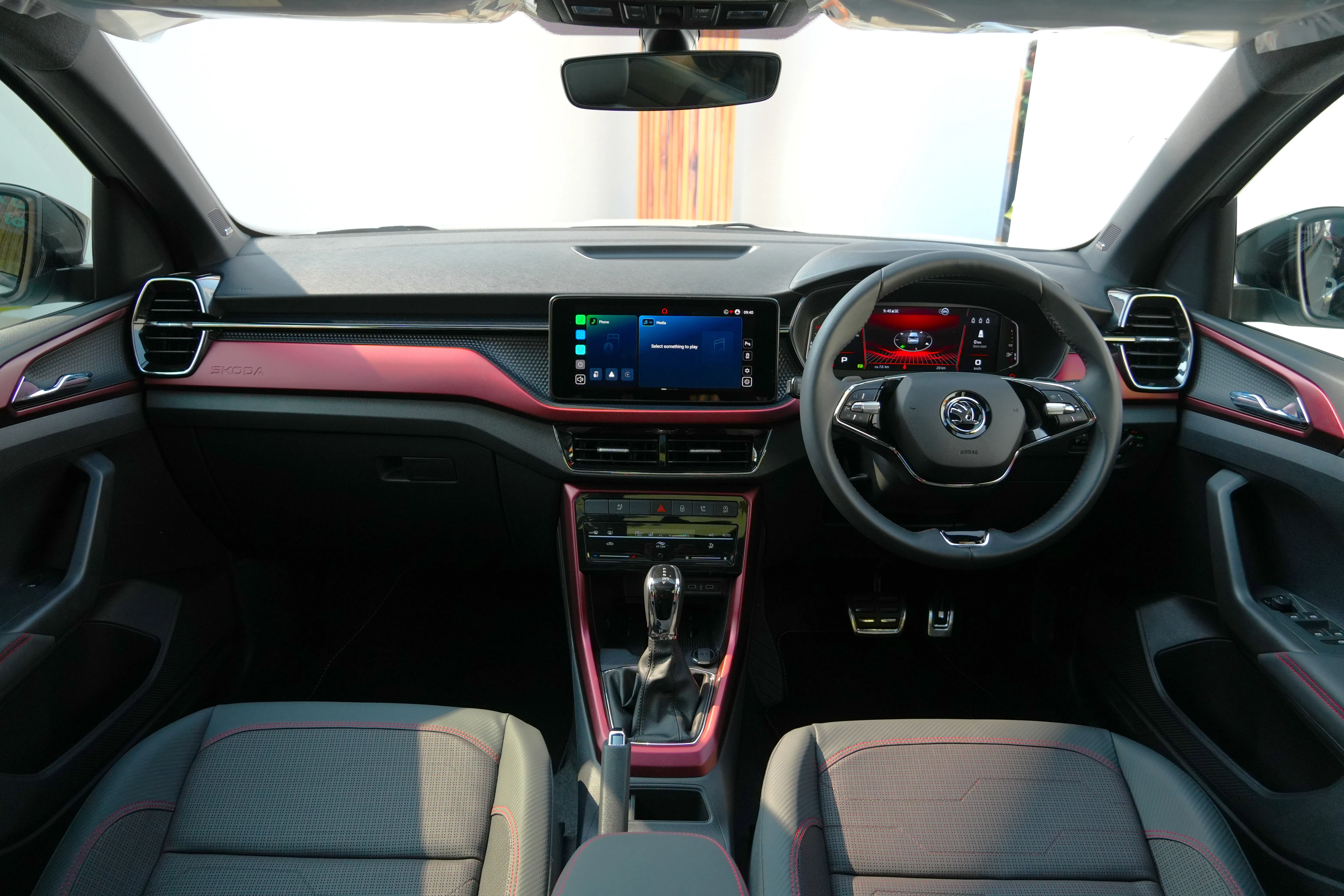
Inside, the changes are less about layout and more about equipment and ambience. The familiar dashboard stays, but the Kushaq now gets a 10.25-inch digital driver’s display, a 10.1-inch infotainment screen with updated software, dual-colour ambient lighting, and a panoramic sunroof on higher trims, while lower variants get a single-pane unit as standard. Skoda has also added a variable-displacement AC compressor, which may sound like a technical footnote, but in Indian conditions, better air-conditioning performance is not a footnote at all. It is daily quality of life.
And then comes the one feature that genuinely stands out: rear seat massage function.
That is the kind of addition nobody was expecting in a Kushaq, or in this segment at all. It sounds like a novelty at first, but it also reveals something about Skoda’s intent with this facelift. The old Kushaq leaned more naturally toward the driver. This one tries harder to appeal to the family buyer as well. It is still a driver-friendly SUV, but it now wants the rear seat occupant to feel equally considered.
There are other welcome additions too — powered front seats, ventilated front seats, wireless Apple CarPlay and Android Auto, front parking sensors, leatherette upholstery, wireless charging and improved standardisation across the range. Even the lower-spec variants now come across as better equipped than before, which is an important strength in a market where the entry trim often shapes a buyer’s first impression of a car.
That said, the facelift does not erase every gap.
The Kushaq still does not fully solve the size-perception issue it has always had against rivals like the Creta, Seltos and newer, broader-looking SUVs in the segment. It remains a good four-seater more than an effortless five-seater. It also misses out on a 360-degree camera and ADAS, both of which are becoming increasingly relevant in this class. For buyers who want the most feature-loaded SUV on the spec sheet, these omissions will matter.
But this is also where the Kushaq remains very Skoda.
Rather than trying to become a copy of the segment formula, it improves the areas that fit its personality. It still offers strong road manners, confident high-speed stability, and two turbo-petrol engines that continue to be among the more rewarding options in the segment. The 1.0 TSI remains punchy enough for most buyers, while the 1.5 TSI DSG continues to be the enthusiast’s pick with stronger top-end performance, better refinement and more urgency when pushed.
Interestingly, Skoda has also improved the 1.5 TSI line-up with rear disc brakes as standard, which adds more substance to the higher-end variants. The claimed fuel-efficiency for the 1.5 DSG has improved too, now standing at 18.72kpl.
Pricing for the facelift ranges from Rs 10.69 lakh to Rs 18.99 lakh, and increases over the pre-facelift model go up to Rs 94,000 depending on the variant. The new Classic+ replaces the old Classic as the entry point and, importantly, now offers an automatic option as well. That changes the entry-level equation for urban buyers who want the Kushaq experience without stretching into the upper trims.
In fact, one of the most interesting things about the facelift is not the top-end version, but how much Skoda has improved the lower half of the range. The base variant itself comes with a respectable list of essentials including a sunroof, automatic climate control with rear vents, rain-sensing wipers, alloy wheels, auto headlamps, touchscreen infotainment and six airbags. That makes the Kushaq feel less like a car you need to “upgrade out of” immediately.
So what has actually changed for buyers?
Quite a lot, but not in a loud way.
The Kushaq facelift is still not chasing everyone. It still speaks most strongly to buyers who value driving confidence, solid safety, mature styling and a slightly more polished overall feel. What has changed is that it now asks for fewer compromises than before. The new automatic is better, the feature list is stronger, the cabin feels more current, and lower variants look more sensible.
In other words, the Kushaq has not changed its nature. It has just become easier to justify.
And in this segment, that might be exactly the update Skoda needed.