Renault Duster Is Back: Why It Still Matters in 2026 and What Renault Got Right
4 min read
There are very few cars in India that carry real legacy. The Renault Duster is one of them.
When it first arrived, it didn’t just compete in the mid-size SUV space — it defined it. And then, over time, as rivals became more feature-loaded and refined, the Duster quietly faded out.
Now it’s back.
But this isn’t a nostalgic comeback. It’s a reset.
Launched at Rs 10.29 lakh (ex-showroom), the all-new Duster enters a segment that looks very different from the one it once dominated — now filled with highly polished, feature-heavy SUVs like the Hyundai Creta, Kia Seltos and Maruti Grand Vitara.
So the real question isn’t whether the Duster is back.
It’s whether it still makes sense.
This Time, Renault Isn’t Guessing — It’s Responding
One of the biggest criticisms of the older Duster was simple: it felt too basic as the segment evolved.
This time, Renault hasn’t ignored that.
The new Duster is built on the RGMP (Renault Group Modular Platform), specifically adapted for India. That matters more than it sounds. Because this platform shift is what allows Renault to improve refinement, safety, and feature integration — without losing the rugged DNA that made the Duster popular in the first place.
And that balance is where this new version starts to feel relevant again.
The Powertrain Strategy Is Where Renault Played It Smart
Instead of forcing a single direction, Renault has opened up multiple entry points into the Duster.
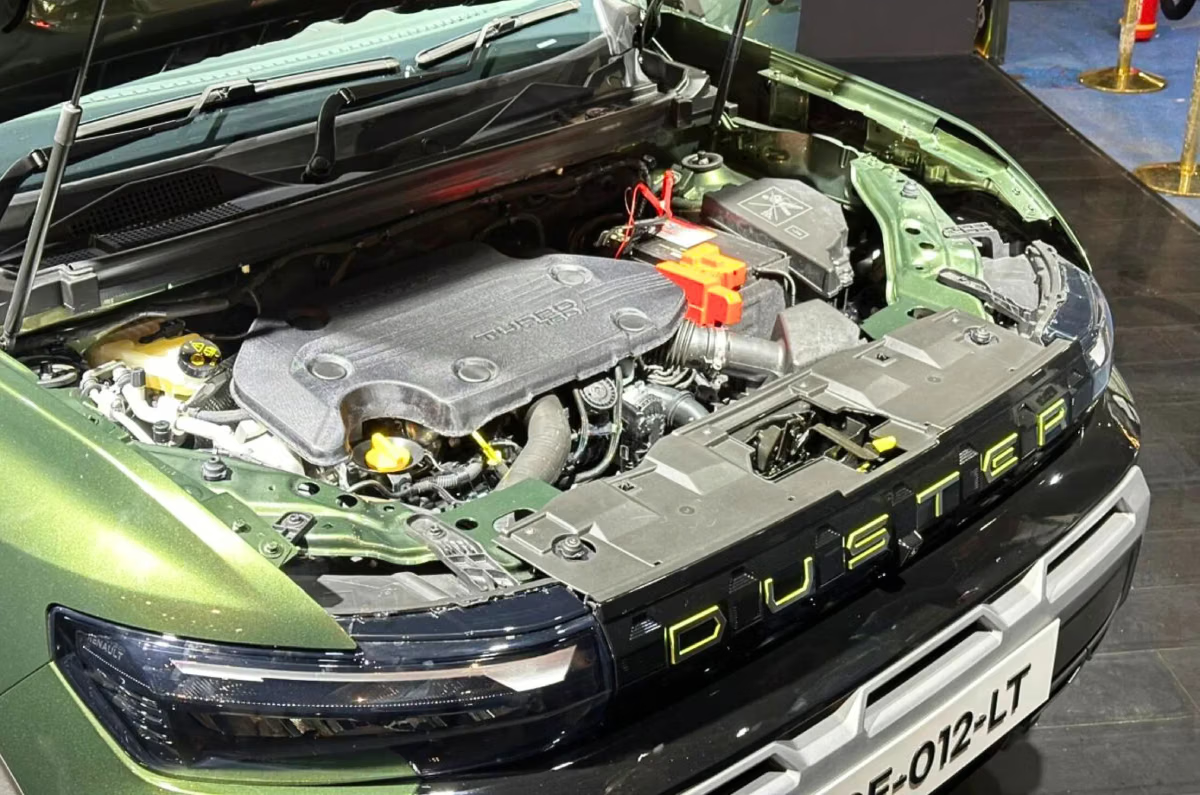
At launch, you get two turbo-petrol engines:
A 1.0-litre turbo-petrol for accessibility and everyday use, and a 1.3-litre turbo-petrol that pushes out 163hp and 280Nm, aimed at buyers who still care about performance.
But the bigger move is what’s coming next.
A strong-hybrid powertrain, expected around Diwali 2026, combines a petrol engine with electric assistance to deliver a claimed 160hp system output. More importantly, Renault says this setup can handle a significant portion of city driving in electric mode.
That’s not just about efficiency — it’s about future-proofing.
And early demand already reflects that shift.
It Still Looks Like a Duster — and That’s Intentional
Renault hasn’t tried to reinvent the Duster’s identity.
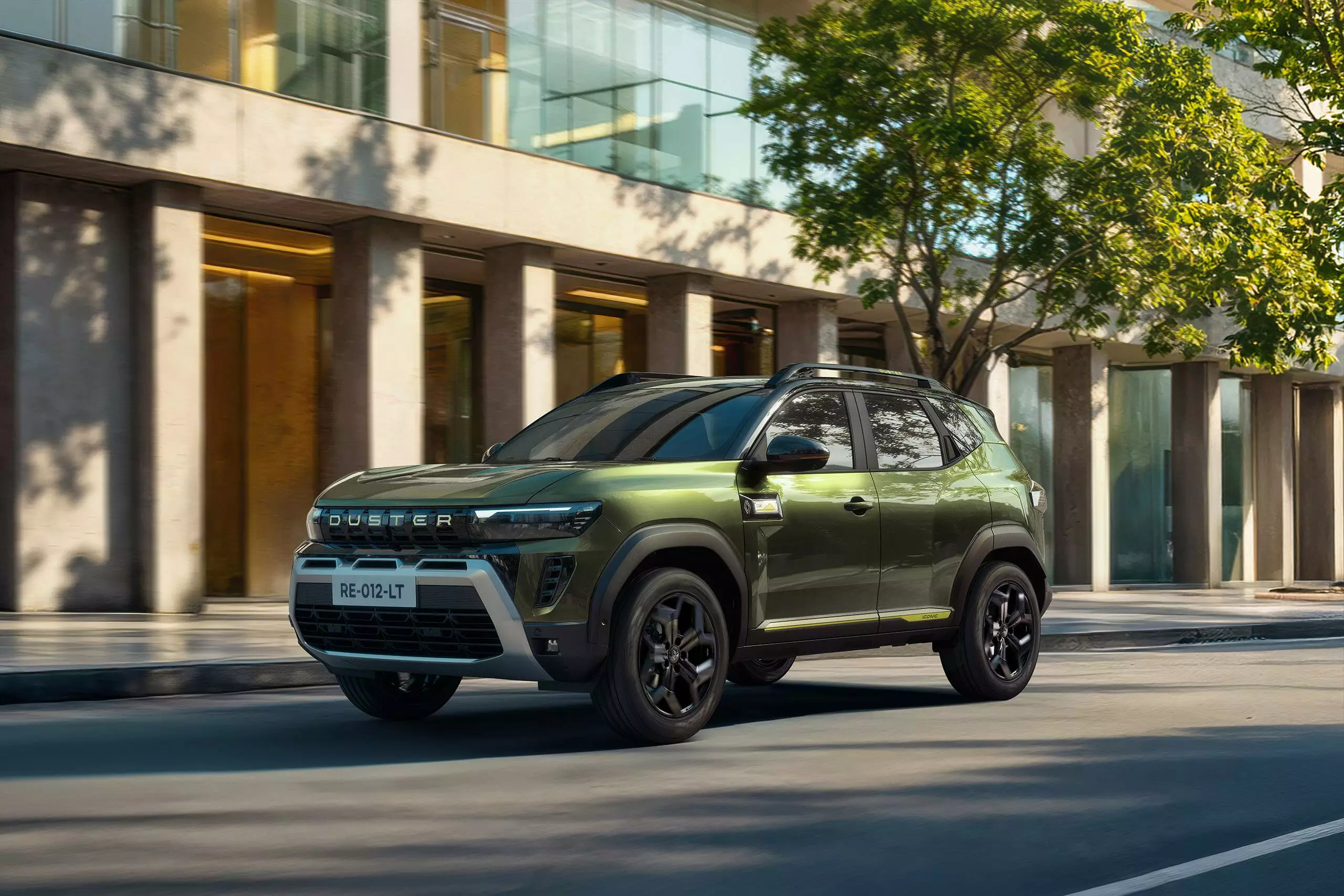
The new design feels more modern, but it doesn’t abandon its roots. You still get a muscular stance, strong cladding, high ground clearance (212mm) and a shape that prioritises practicality over flashiness.
Details like the ‘Duster’ lettering on the grille, eyebrow-style LED DRLs and connected tail lamps update the look, but the overall character stays grounded.
In a segment where many SUVs are starting to look more urban and crossover-like, this matters.
The Duster still looks like something that belongs beyond city roads.
The Cabin Finally Fixes What Was Broken
If the old Duster had one major weakness, it was the interior.
That’s been addressed properly this time.
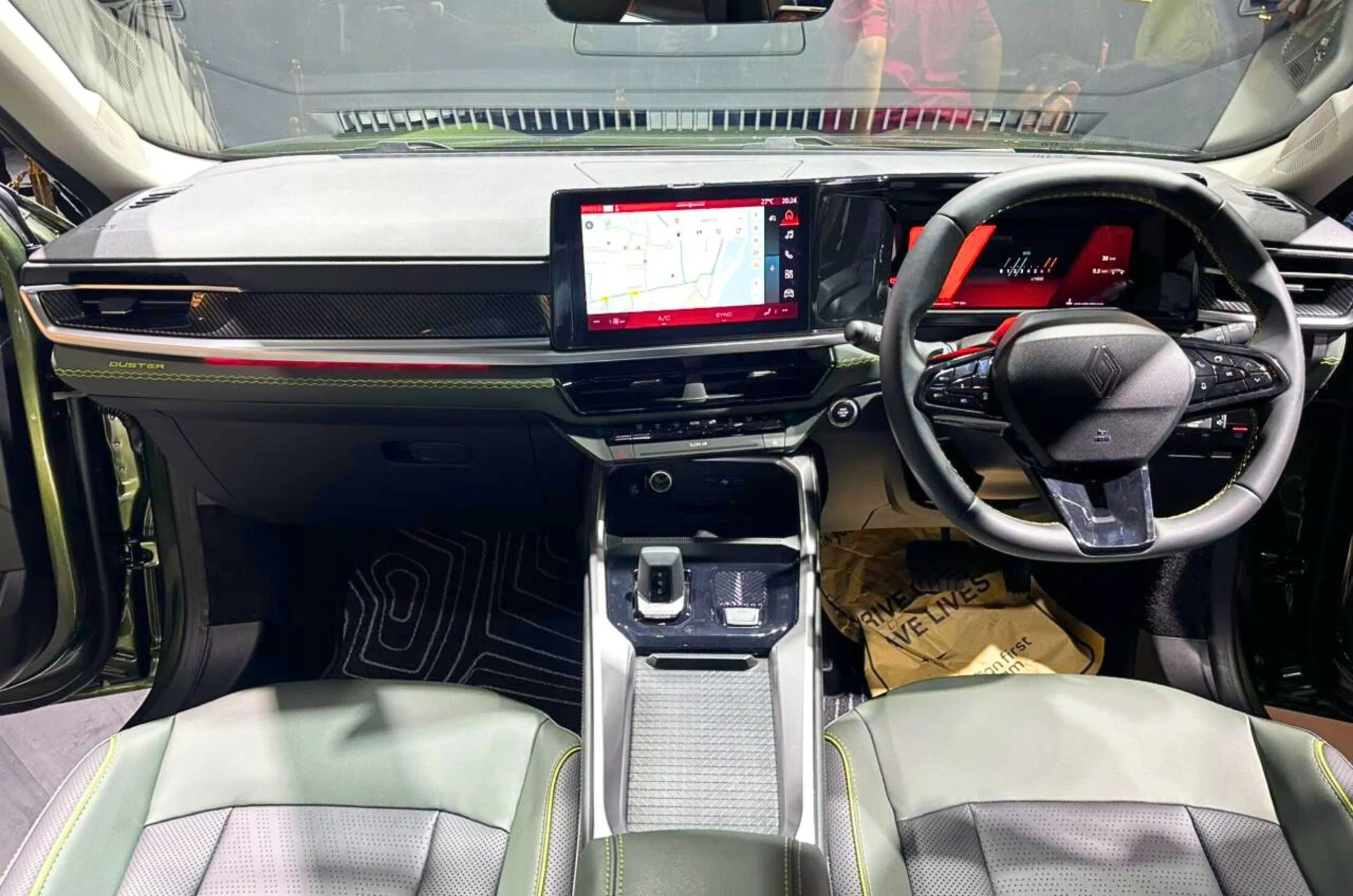
The new model gets a dual-screen setup, better materials, leatherette finishes and a layout that balances digital interfaces with physical controls. It now feels aligned with what buyers expect in this segment, without overcomplicating the experience.
Features include a 10.1-inch touchscreen, a 10.25-inch digital cluster, panoramic sunroof, ventilated front seats, wireless connectivity and a powered tailgate.
This isn’t just an upgrade — it’s a correction.
Renault has brought the Duster up to segment standards without losing its usability-focused approach.
Safety and Tech: A First for Renault in India
For the first time, the Duster introduces Level 2 ADAS in a Renault product in India.
Alongside that, you get six airbags as standard, a 360-degree camera, disc brakes on all four wheels and a comprehensive safety package. Renault is also targeting a 5-star crash safety rating, which would be critical for its positioning going forward.
This is another clear signal.
The Duster is no longer relying only on its rugged reputation — it is now playing by modern segment expectations.
Pricing Strategy: Quietly Aggressive
The Duster starts at Rs 10.29 lakh and goes up to Rs 18.49 lakh, placing it right in the middle of the segment.
But the way Renault has structured it is more interesting than the numbers themselves.
The base variants undercut many rivals, while the higher variants stay competitive despite offering strong performance and future hybrid tech. There’s also a subscription model being introduced, which bundles ownership into a monthly format — something that could appeal to urban buyers who don’t want a traditional purchase commitment.
This layered approach gives the Duster flexibility.
It can attract both value-focused buyers and those looking for something more future-ready.
The Bigger Insight: The Duster Isn’t Trying to Be Everything
This is where the new Duster feels different.
It is not trying to out-feature every rival. It is not trying to become the most premium SUV in the segment. And it is not chasing trends blindly.
Instead, it builds on three core ideas:
- Strong fundamentals (ride, practicality, ruggedness)
- Modern essentials (features, safety, tech)
- Future readiness (hybrid powertrain)
That clarity might actually work in its favour.
Because the segment today is crowded with SUVs that are increasingly similar in how they look and feel. The Duster, even now, stands slightly apart.
Should You Be Paying Attention to the Duster Again?
If you are looking for:
- A mid-size SUV that still feels like an SUV
- Strong engine options, especially the 1.3 turbo
- A future-ready hybrid option
- A balance between practicality and modern features
then yes — the new Duster deserves serious attention again.
It may not dominate the segment the way it once did.
But it doesn’t need to.
It just needs to be relevant again.
And this time, Renault seems to have understood exactly what that requires.