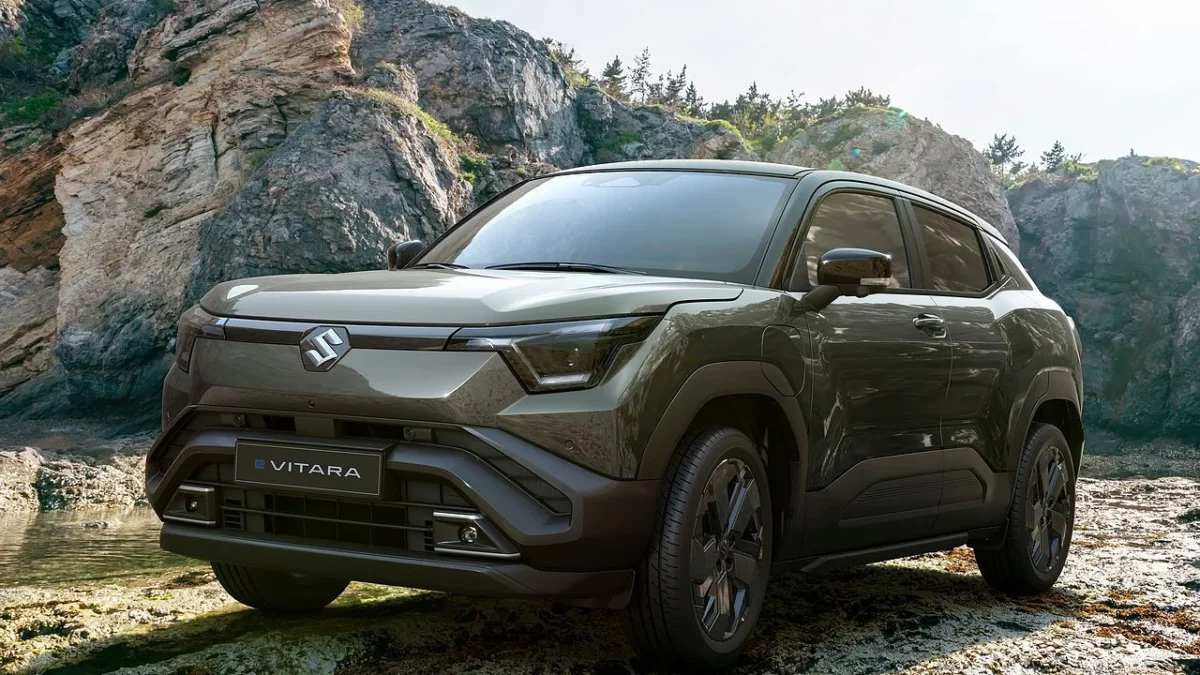
Maruti Suzuki e Vitara Full Prices Announced – Rs 15.99 Lakh With Battery, BaaS From Rs 10.99 Lakh
4 min read
Maruti Suzuki e Vitara Full Prices Out – What It Really Costs
A day after launch, Maruti Suzuki has revealed the complete pricing structure of its first electric SUV, the e Vitara — including the all-important ex-showroom prices without the Battery-as-a-Service (BaaS) model.
The headline figure at launch — Rs 10.99 lakh — applied under the BaaS scheme. Now, with battery-inclusive pricing confirmed, the e Vitara starts at Rs 15.99 lakh and goes up to Rs 19.79 lakh (ex-showroom). All prices are introductory and valid until 31 March.
For buyers, this clarity changes the evaluation completely. The e Vitara is no longer just a disruptive entry-price headline — it is now a fully defined electric SUV proposition.
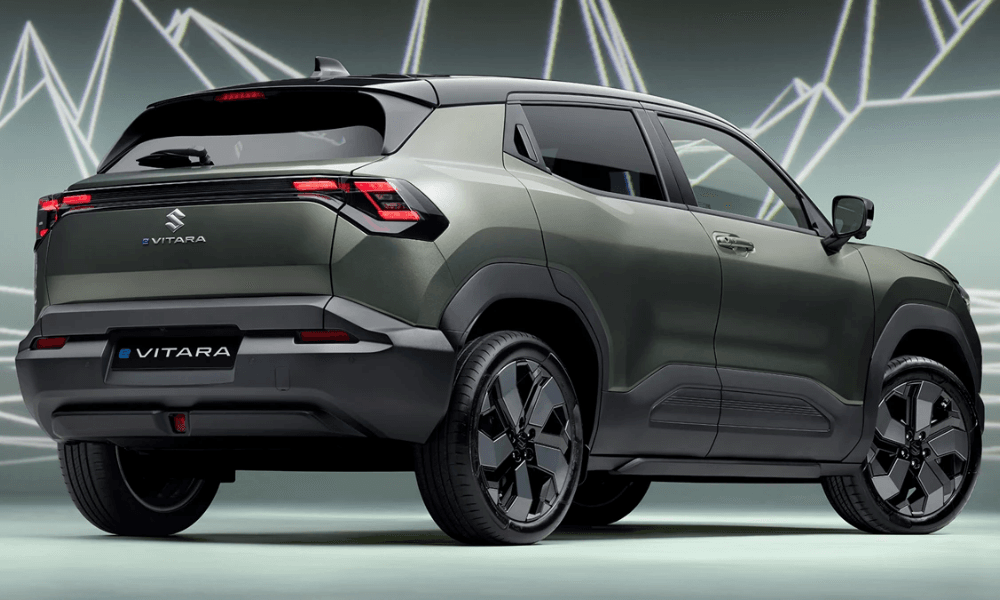
e Vitara Price Breakdown – With and Without BaaS
Maruti is offering the e Vitara in three variants: Delta, Zeta and Alpha, across two battery options.
Battery-as-a-Service (BaaS) Pricing
Delta (49kWh) – Rs 10.99 lakh + Rs 3.99/km battery rental
Zeta (61kWh) – Rs 11.99 lakh + Rs 4.39/km battery rental
Alpha (61kWh) – Rs 14.29 lakh + Rs 4.39/km battery rental
Battery Included (Standard Purchase)
Delta 49kWh – Rs 15.99 lakh
Zeta 61kWh – Rs 17.49 lakh
Alpha 61kWh – Rs 19.79 lakh
The dual-tone finish is exclusive to the Alpha trim at an additional Rs 21,000.
The BaaS model significantly lowers the entry price but shifts battery cost into a per-kilometre usage fee. For high-mileage users, doing the math becomes essential. For buyers who prefer ownership clarity and predictable long-term costs, the battery-inclusive price may feel more straightforward.
Battery, Range and Performance
The Delta variant is powered by a 49kWh battery pack producing 142bhp and 193Nm, with a claimed MIDC range of 440km.
The Zeta and Alpha variants use a larger 61kWh battery delivering 172bhp and the same 193Nm torque output. Claimed range increases to 543km.
Charging flexibility is comprehensive. Using a 7kW AC charger, the smaller battery charges from 10–100 percent in approximately 6.5 hours, while the larger pack takes around 9 hours. With an 11kW AC charger, charging times reduce to roughly 4.5 and 5.5 hours respectively. A 70kW DC fast charger can replenish both batteries from 10–80 percent in about 45 minutes.
Maruti is also including a complimentary home charger with installation, which meaningfully reduces initial setup friction for first-time EV buyers.
Infrastructure and Ownership Confidence
To support its EV rollout, Maruti claims to have established over 2,000 charging points across 1,100 cities, including the top 100 EV-focused markets. Partnerships with 13 charge point operators aim to strengthen public charging accessibility.
Ownership reassurance is equally central to the strategy. The e Vitara comes with an 8-year/1,60,000km battery warranty and a 60 percent assured buyback value after three years. For a brand entering the EV segment for the first time, this is a deliberate move to reduce hesitation.
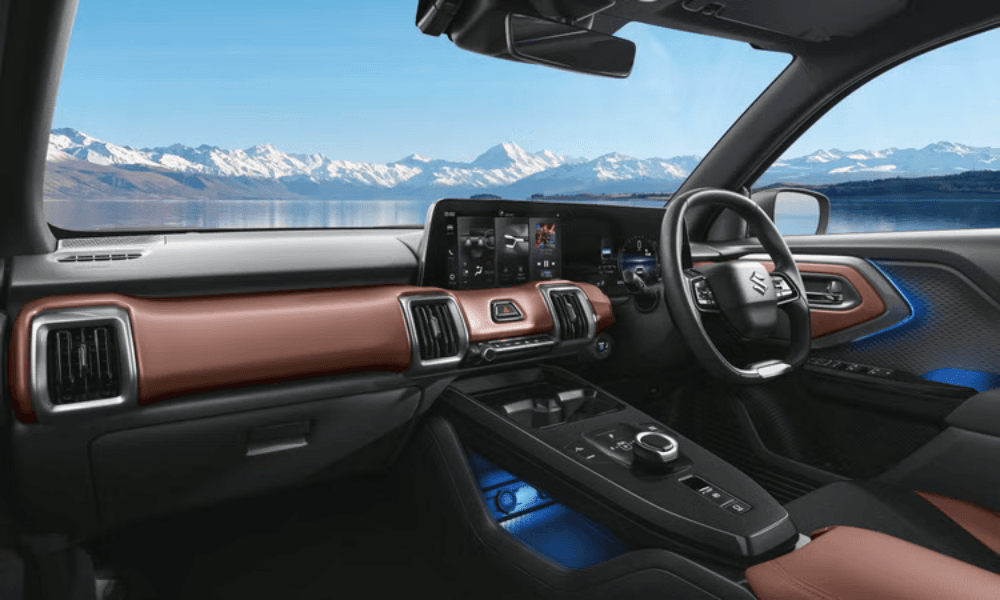
Design and Cabin Experience
The e Vitara draws inspiration from the earlier eVX concept, translating it into a production-ready SUV measuring 4,275mm in length with a 2,700mm wheelbase. The stance is upright and contemporary, with Y-shaped LED DRLs, LED tail lamps and 18-inch alloy wheels adding visual presence.
Inside, the layout is modern without being experimental. A dual-screen setup, two-spoke steering wheel and floating centre console give it a distinct identity within Maruti’s portfolio. The feature list includes a 10.25-inch touchscreen, wireless Android Auto and Apple CarPlay, ventilated front seats, powered driver seat, fixed glass sunroof, 360-degree camera and Level 2 ADAS.
The equipment strategy signals that Maruti is not positioning the e Vitara as a basic urban EV. It is aiming squarely at premium compact SUV buyers transitioning from petrol or hybrid models.
Which Version Makes Financial Sense?
The Delta variant, at Rs 15.99 lakh with battery included, will likely appeal to price-sensitive buyers entering EV ownership for the first time. It offers respectable range without stretching into higher pricing bands.
However, the 61kWh Zeta at Rs 17.49 lakh may represent the stronger long-term value. The larger battery not only improves range but enhances highway usability and resale confidence.
The Alpha trim pushes close to Rs 20 lakh, where buyers will expect a fully loaded experience. Its appeal will rest on features and range rather than price advantage.
The real decision point remains BaaS versus outright purchase. Low annual mileage users may find BaaS financially attractive. High-usage owners may benefit more from locking in the battery cost upfront.
Why This Pricing Matters
The launch yesterday created attention. Today’s full pricing creates clarity.
With both purchase models now transparent, the e Vitara enters the market as a structured, scalable EV offering rather than a marketing experiment. Maruti has combined aggressive entry pricing, strong warranty backing and widespread charging partnerships to reduce adoption anxiety.
For buyers evaluating electric SUVs in the Rs 16–20 lakh bracket, the e Vitara is no longer a question mark. It is now a clearly defined option — and potentially one of the most strategically priced EV launches of the year.
For those considering the shift to electric, this is the point where evaluation should begin in earnest.