Hyundai Exter Facelift: What Has Changed and Does It Make More Sense Now?
5 min read
Hyundai has updated the Exter with a facelift, pricing it between Rs 5.80 lakh and Rs 9.42 lakh ex-showroom. On the surface, this is not a dramatic reinvention. The engines remain the same, the overall shape is familiar, and the Exter still sits in the same role it always did — a city-friendly, feature-rich small SUV aimed at buyers who want more personality than a hatchback without stretching into a larger and more expensive compact SUV.
But that does not mean this update is minor in the ways that matter.
Because the Exter was already a product built around smart packaging, urban usability and feature appeal. What Hyundai seems to have done with this facelift is polish the rough edges, freshen the cabin experience and add a few thoughtful improvements that make the Exter feel more complete without disturbing the formula that worked.
And in a segment where buyers notice design presence, cabin ambience and everyday convenience just as much as they notice engine specs, that is a sensible move.
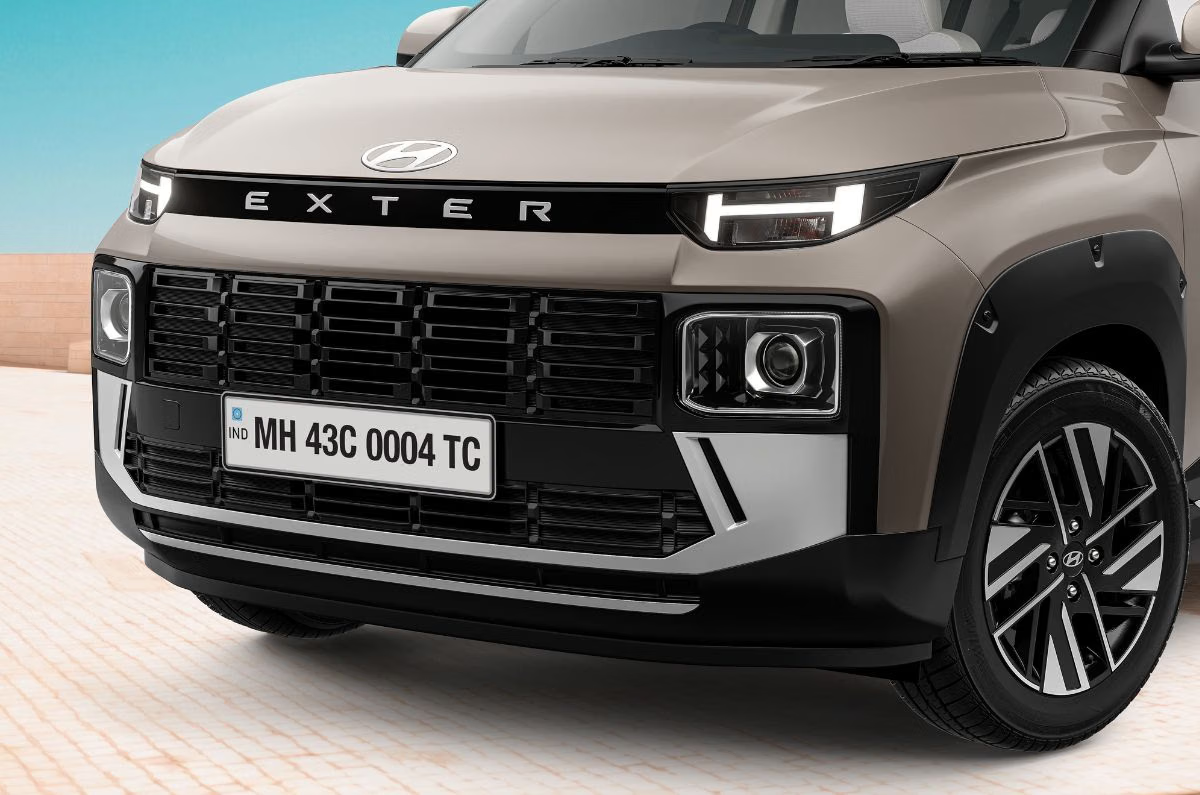
The most visible changes are on the outside. Hyundai has revised the front bumper, reworked the grille area and repositioned the Exter branding onto the trim that connects the DRLs. The wheel arch cladding looks chunkier than before, the 15-inch alloy wheels get a new design, and there is a fresh C-pillar garnish as well. Around the back, the bumper has been revised and the spoiler now gets a more wing-like split design.
None of these changes transform the Exter into a different-looking SUV, but they do make it look a little more mature and a little less toy-like. That is important, because the Exter’s appeal was always tied to its upright stance and quirky styling, but some buyers may have found the earlier design slightly too playful. This facelift tones that down just enough.
The two new colours — Golden Bronze and Titanium Black Matte — also help. They give Hyundai a way to make the Exter look more premium without changing the sheet metal.
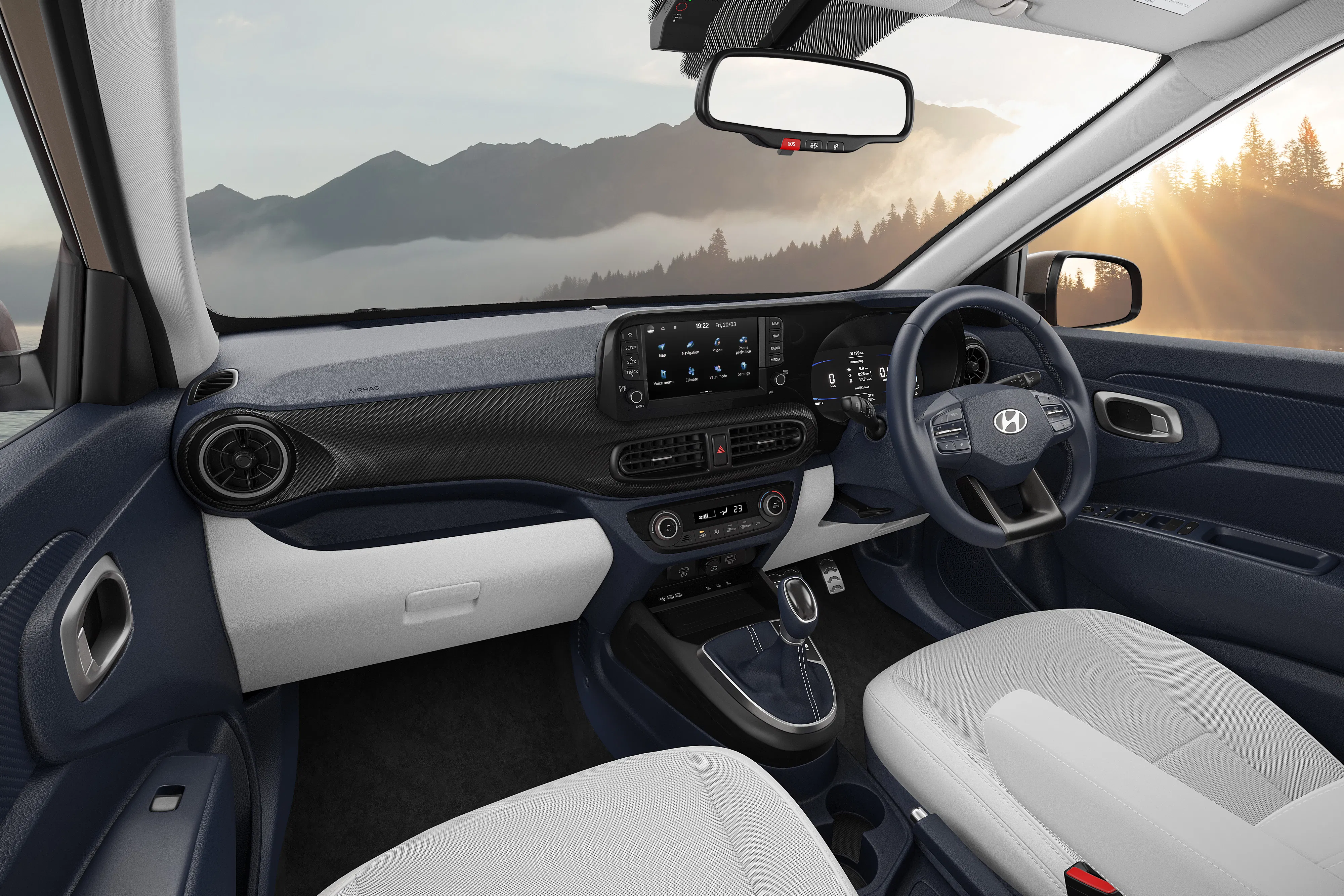
Inside, the update is more interesting than the exterior.
The earlier all-black cabin has now made way for a dual-tone navy blue and grey theme, and that change alone gives the Exter a fresher and more upmarket feel. In a car at this price point, cabin colour and texture matter more than many brands assume. A lighter, more thoughtfully finished interior can change first impressions significantly, especially for family buyers stepping up from a hatchback.
Hyundai has also added new semi-fabric beige upholstery, a fresh dashboard trim finish, a new flat-bottom steering wheel and metal pedals. These are not headline-grabbing upgrades, but together they make the Exter feel less carried over and more deliberately updated.
The more meaningful improvements, however, are the practical ones.
The driver now gets a dedicated armrest. Rear passengers get Type-C USB ports. Driver seat height adjustment and adjustable rear headrests have been standardised across the range. Smartphone connectivity is now more convenient too, with Apple CarPlay and Android Auto supported wirelessly via an adapter. These are exactly the kind of changes that rarely dominate launch headlines but quietly improve ownership satisfaction.
That is where Hyundai has judged this facelift well.
Instead of chasing an overblown feature war, it has focused on making the Exter easier to live with every day.
The rest of the feature list continues to be one of the Exter’s strengths. Depending on the variant, buyers still get an 8-inch touchscreen, an 8-inch digital driver’s display, cruise control, automatic climate control, wireless phone charging, a single-pane sunroof, dashcam, rear parking camera and automatic headlamps. In the small SUV space, that still keeps the Exter competitively equipped.
Safety equipment also remains a strong talking point. Six airbags, ESC, hill-start assist control and central locking are standard, while higher variants add more convenience and visibility features. That matters because the Exter is not just being compared on style or price anymore — buyers in this segment are increasingly paying attention to what comes standard.
Mechanically, Hyundai has not changed anything, and that will probably not bother most buyers.
The Exter continues with the familiar 1.2-litre four-cylinder petrol engine producing 83hp and 114Nm, available with either a 5-speed manual or 5-speed AMT. The factory-fitted CNG option remains on offer too, producing 69hp and 95Nm in CNG mode with a 5-speed manual gearbox.
That means the facelift is not about making the Exter faster, more sophisticated or more exciting to drive. It is about making an already proven package look newer and feel better equipped.
For many buyers, especially city users, that is perfectly fine.
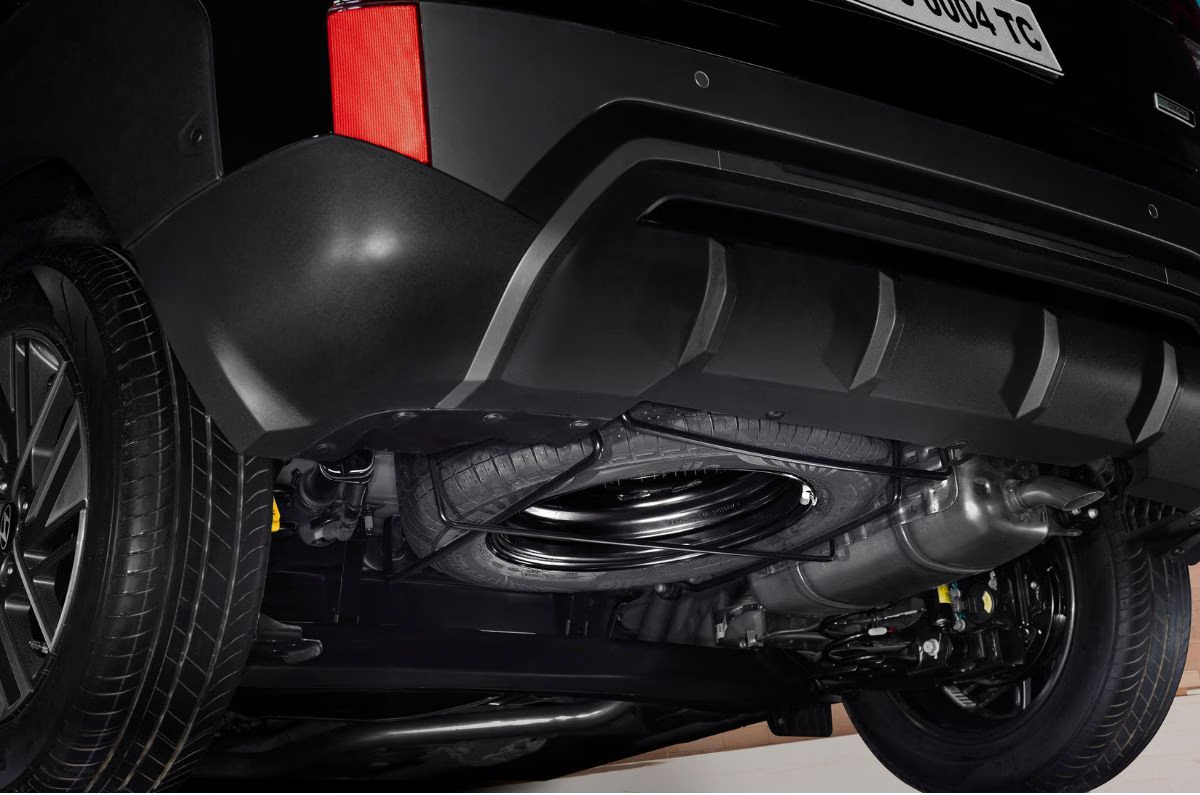
The CNG story remains particularly relevant here. Hyundai’s dual-cylinder setup continues to be one of the Exter’s practical strengths because it preserves more usable boot space than a traditional single-cylinder layout would. Hyundai also continues to offer a spare wheel in the CNG variant, mounted underneath the car, which is a useful detail many budget-conscious and high-usage buyers will appreciate.
That gives the Exter an important edge: it is not just a petrol small SUV with a CNG option added as an afterthought. The CNG version still feels like a properly considered part of the range.
Prices for the facelift now start at Rs 5.80 lakh, which is around Rs 16,000 higher than before at the base end, while the top end sees only a marginal increase. That seems reasonable given the styling refresh, the cabin changes and the small but meaningful feature additions.
More importantly, the Exter continues to play in a very important zone of the market. It is still one of the most relevant choices for buyers who want something that feels more SUV-like than a hatchback, but remains easier to own and use than a larger compact SUV. It also continues to rival the Tata Punch, which has been a strong benchmark in this part of the market.
So does the facelift make the Exter a better buy?
Yes, but not because Hyundai has changed the fundamentals.
It makes more sense now because it feels more polished. The exterior has a little more maturity, the cabin feels fresher, the equipment list gets a few thoughtful upgrades, and the value equation remains intact. It is the same Exter underneath, but a slightly better judged one on top.
And honestly, that may have been the right approach.
The Exter did not need a reinvention. It needed refinement.
For buyers considering a small urban SUV with petrol, AMT and CNG options on the table, the updated Exter still makes a strong case for itself — and now does so with a bit more style and a bit more everyday usability.
A buyer comparing the Exter with the Punch, or trying to decide whether the CNG variant is worth it, would now have even fewer reasons to dismiss it.
And that is exactly what a good facelift is supposed to achieve.
To check current Hyundai Exter prices, nearby authorised showroom offers or a test drive option, Carbae can be used as a practical starting point while shortlisting. For buyers planning an upgrade, it can also help make the move from an older car to a new Exter feel more organised rather than fragmented.