2026 Hyundai Verna Facelift Launched at Rs 10.98 Lakh: More Features, Sharper Look for India’s Tech-Focused Sedan
4 min read
Hyundai Verna has received its 2026 model-year update in India, with prices now starting at Rs 10.98 lakh and going up to Rs 18.25 lakh (ex-showroom).
At first glance, the update doesn’t attempt to reinvent the sedan. Instead, Hyundai has taken a more measured approach—tweaking the design, adding a few meaningful features and refining the overall package that has already made the Verna one of the most tech-focused cars in its segment.
In a market where SUVs dominate the conversation, the Verna continues to represent Hyundai’s belief that the midsize sedan still has room to evolve rather than simply survive.
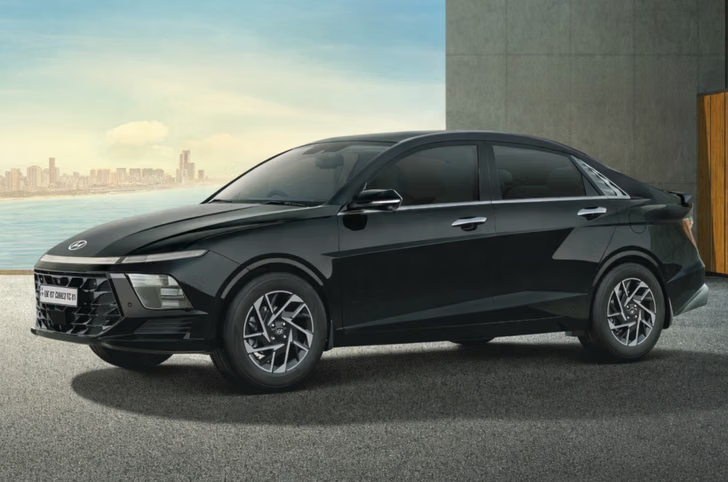
What Has Changed on the Outside
The visual changes are subtle but noticeable if you know where to look.
Up front, the bumper has been redesigned and now houses a slightly larger grille flanked by updated LED projector headlamps. The wide LED light bar that stretches across the nose remains a defining element of the Verna’s design, though it now appears slightly thicker and more prominent than before.
Move to the rear and the familiar connected taillamp layout stays intact. Hyundai has revised the bumper with a diffuser-style element finished in silver, while the stepped rear spoiler continues unchanged. The car now rides on 16-inch diamond-cut alloy wheels, and two fresh colour options—Classy Blue and Titan Grey Matte—have been added to the palette.
Dimensionally, the Verna grows slightly longer by 30mm, taking the overall length to 4565mm, while the rest of the proportions remain unchanged. Boot space continues to stand at 528 litres, which is among the largest in the segment.
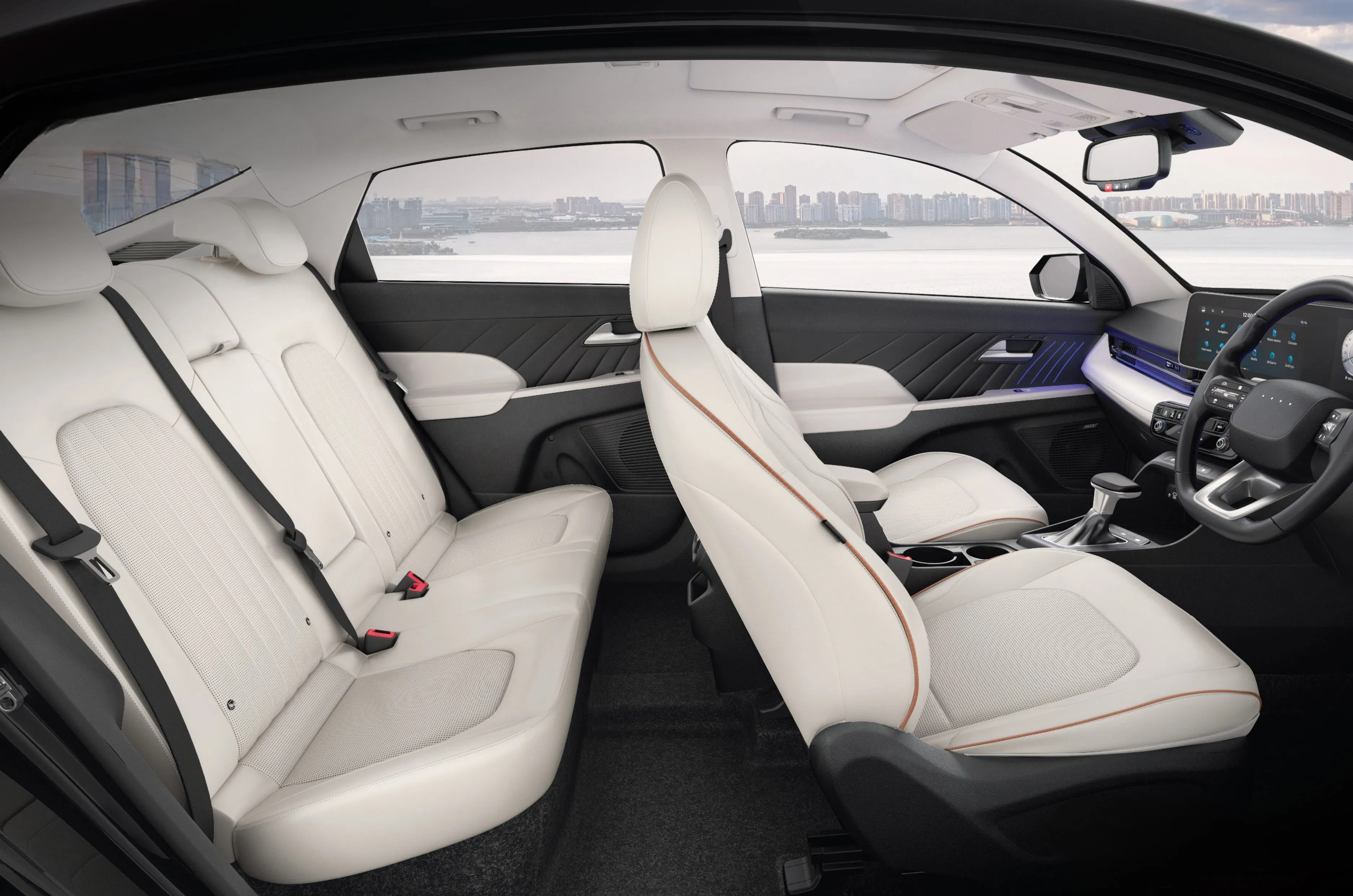
Inside the Cabin: Familiar Layout, New Conveniences
Step inside and the overall layout feels familiar, but Hyundai has introduced a few upgrades aimed at improving day-to-day usability rather than dramatically altering the interior.
The driver-oriented cockpit now features a D-cut steering wheel with Hyundai’s new Morse-code style ‘H’ logo, a design element already seen on newer Hyundai models. The driver’s seat gains an 8-way electric adjustment with memory function and a welcome retract feature, while the front passenger seat now offers 4-way electric adjustment along with a boss-mode style walk-in function.
A rear window sunshade and Hyundai’s Smart Trunk feature—allowing hands-free access to the boot—are also part of the update.
Otherwise, the Verna continues with the equipment that made it one of the most feature-rich sedans in its class: dual 10.25-inch displays for infotainment and instrumentation, ventilated front seats, ambient lighting, wireless smartphone charging and an 8-speaker Bose sound system. The infotainment system supports Android Auto and Apple CarPlay via a wireless adapter.
Safety Gets a Small but Important Boost
Hyundai has also expanded the safety package.
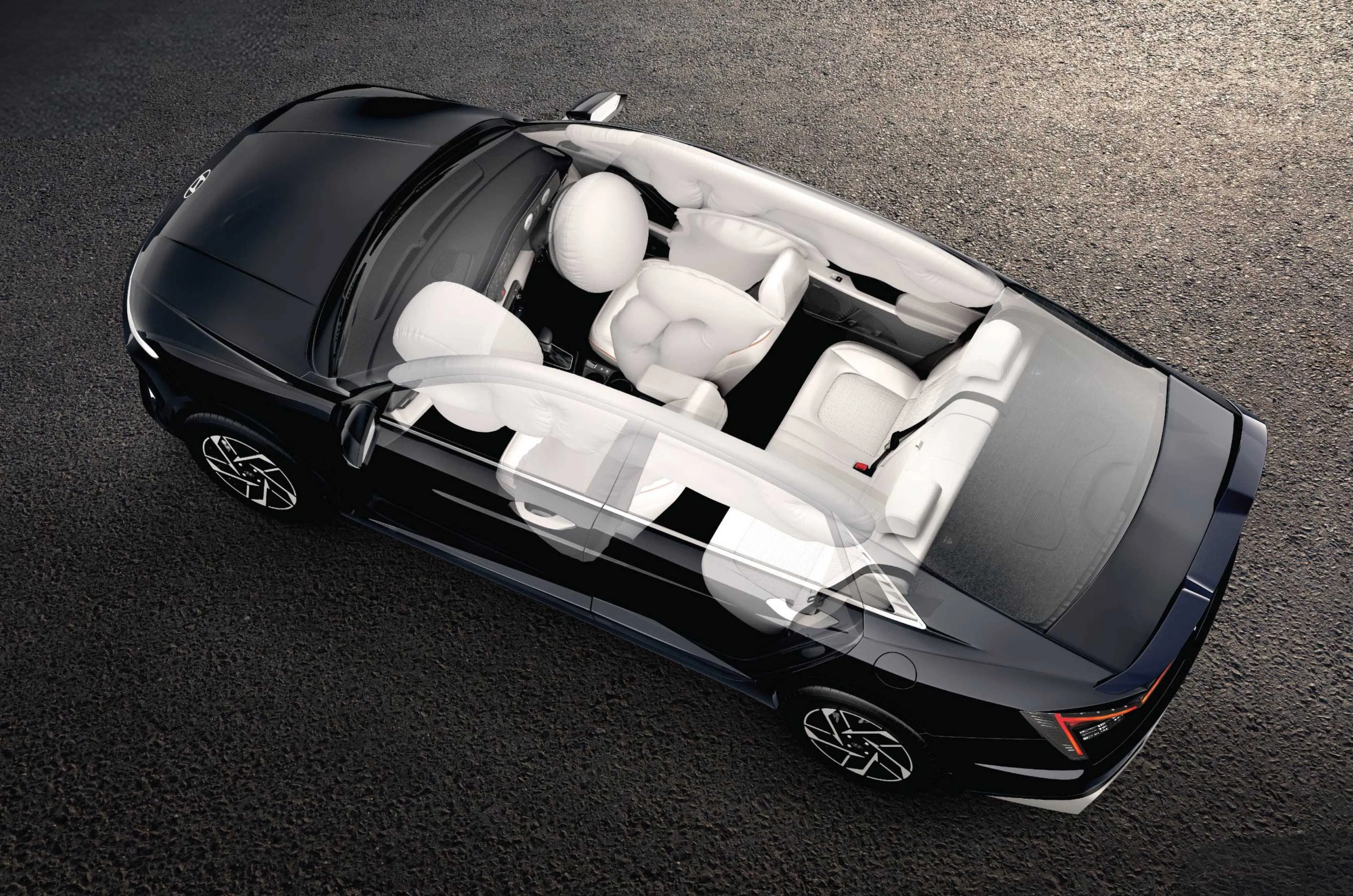
The top variant of the Verna now offers seven airbags, while other variants continue with six airbags as standard. A 360-degree camera with blind-spot monitoring and an integrated dashcam have been added to the equipment list as well.
Beyond that, the sedan retains its comprehensive safety suite including Level 2 ADAS, electronic stability control, all-wheel disc brakes, tyre pressure monitoring and ISOFIX child-seat mounts.
No Changes Under the Hood
Mechanically, the Verna remains unchanged.
Two petrol engine options continue to power the sedan. The first is a 1.5-litre naturally aspirated petrol producing 115PS and 144Nm, available with either a 6-speed manual or a CVT automatic. Buyers looking for stronger performance can still opt for the 1.5-litre turbo-petrol engine, which produces 160PS and 253Nm and comes paired with either a 6-speed manual or a 7-speed dual-clutch automatic gearbox.
The turbo motor remains one of the most powerful engines in the segment, which continues to be a major talking point for the Verna among enthusiasts.
Prices and New Variant Structure
With the 2026 update, Hyundai has also introduced a new variant naming structure aligned with its newer models.
| Variant | Transmission | Price (Ex-showroom) |
|---|---|---|
| HX2 | MT | Rs 10.98 lakh |
| HX4 | MT | Rs 12.25 lakh |
| HX6 | MT / CVT | Rs 13.19 – 14.40 lakh |
| HX6+ | MT / CVT | Rs 13.81 – 15.02 lakh |
| HX8 | MT / CVT / Turbo MT / Turbo DCT | Rs 14.88 – 17.62 lakh |
| HX10 | CVT / Turbo DCT | Rs 17.15 – 18.25 lakh |
The entry price has increased slightly compared to the outgoing model, while the top-end turbo variant is now roughly Rs 1.1 lakh more expensive.
Where the Verna Stands in the Segment
The updated Verna continues to compete with rivals such as the Honda City, Volkswagen Virtus and Škoda Slavia.
Each of these cars approaches the segment differently—Honda focuses on refinement and reliability, Volkswagen and Skoda emphasise driving dynamics, while Hyundai continues to double down on technology and features.
That philosophy hasn’t changed with the facelift.